


Tailoring youth football to fit even better, and mean even more for all young players in England.


FUTUREFIT: DIGITAL CONFERENCE FOR FOOTBALL IN EDUCATION
On Monday 9th March the FA's Education & School Sport Workforce team will be hosting a workshop explaining the changes, why they are being implemented and how they will impact football across the education sector. This will be followed by a Question & Answer session on Tuesday 10th March, to answer questions you have in relation to the changes and how they will be implemented across the sector.
Monday 9th and Tuesday 10th March 2026
4:00 – 4:45pm (both dates)
FutureFit. For their best start in football.
Youth Football is getting even better
We’re ready for the exciting changes coming to Youth Football that will be implemented across football in both education and community settings ahead of the 2026/27 season.
Now here’s everything you, your school, teachers and students need to prepare for the improvements.
Grounded in enjoyment
We’ve spoken to stakeholders across youth football including our partners across the education sector. We have combined this consultation with months of research and the thoughts of the best minds in the game. The results were clear. We need to give every child better opportunities to learn, develop and grow by putting their skills and playing experience first.
FutureFit. For their best start in football.
Youth Football is getting even better
We’re ready for the exciting changes coming to Youth Football that will be implemented across football in both education and community settings ahead of the 2026/27 season.
Now here’s everything you, your school, teachers and students need to prepare for the improvements.
Grounded in enjoyment
We’ve spoken to stakeholders across youth football including our partners across the education sector. We have combined this consultation with months of research and the thoughts of the best minds in the game. The results were clear. We need to give every child better opportunities to learn, develop and grow by putting their skills and playing experience first.
Key Changes
Out of this theory, we’ve rigorously tested the changes to keep evolving Youth Football to be fit for our children.
We’ll all be leading the way to shape the game to be the best fit possible for the next generation to thrive as both people and players, underpinned by our FA Youth Development Framework.


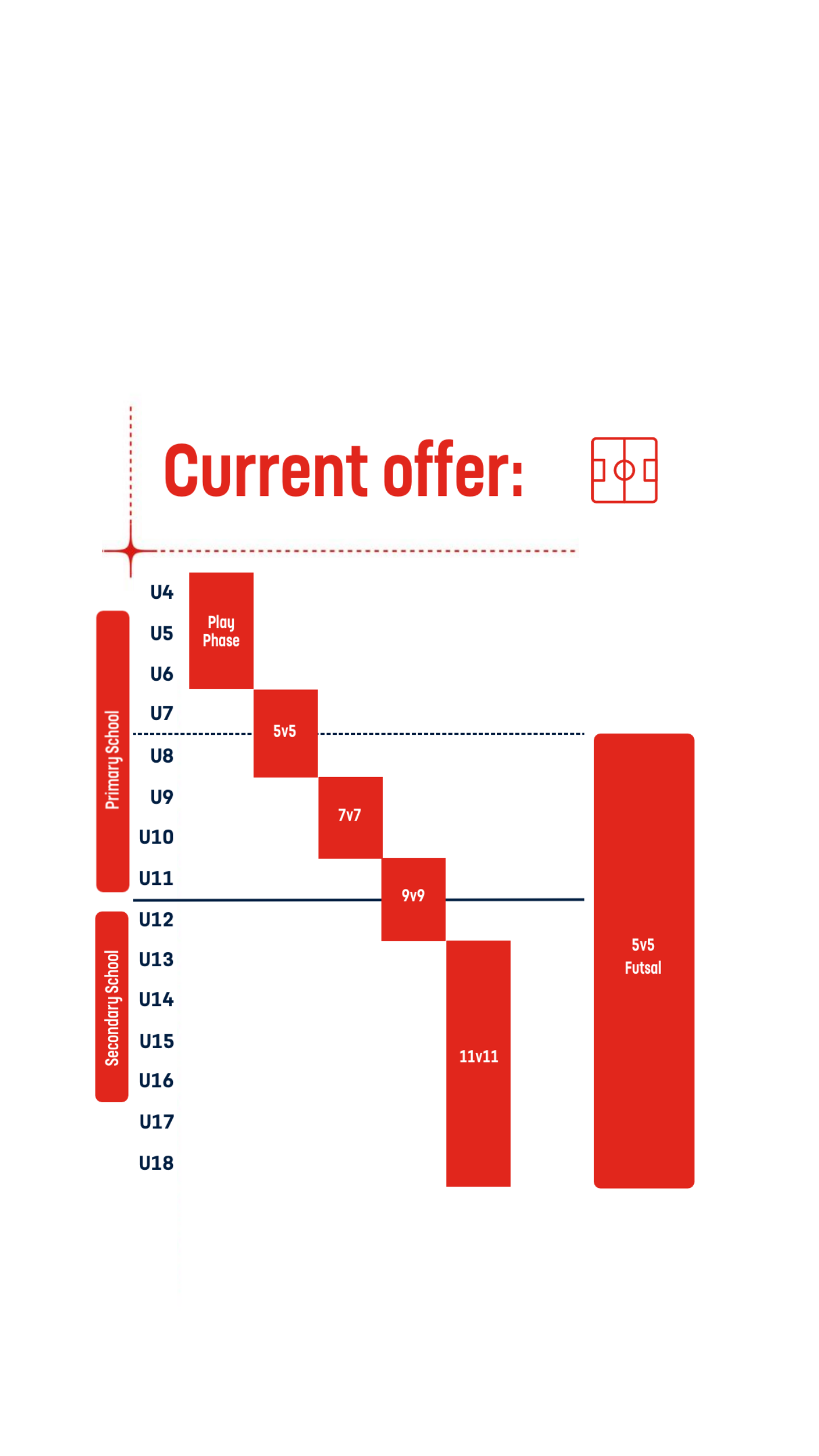
Changes to formats of play
Our changes to the youth player pathway includes creating better alignment with their key transitions in school.
The pathway and maximum formats of play will be implemented consistently across football in both schools and community settings.
This includes the introduction of a new 3v3 at Key Stage 1, and the introduction of 9v9 and more complex rules as children progress to Key Stage 3 and secondary school.


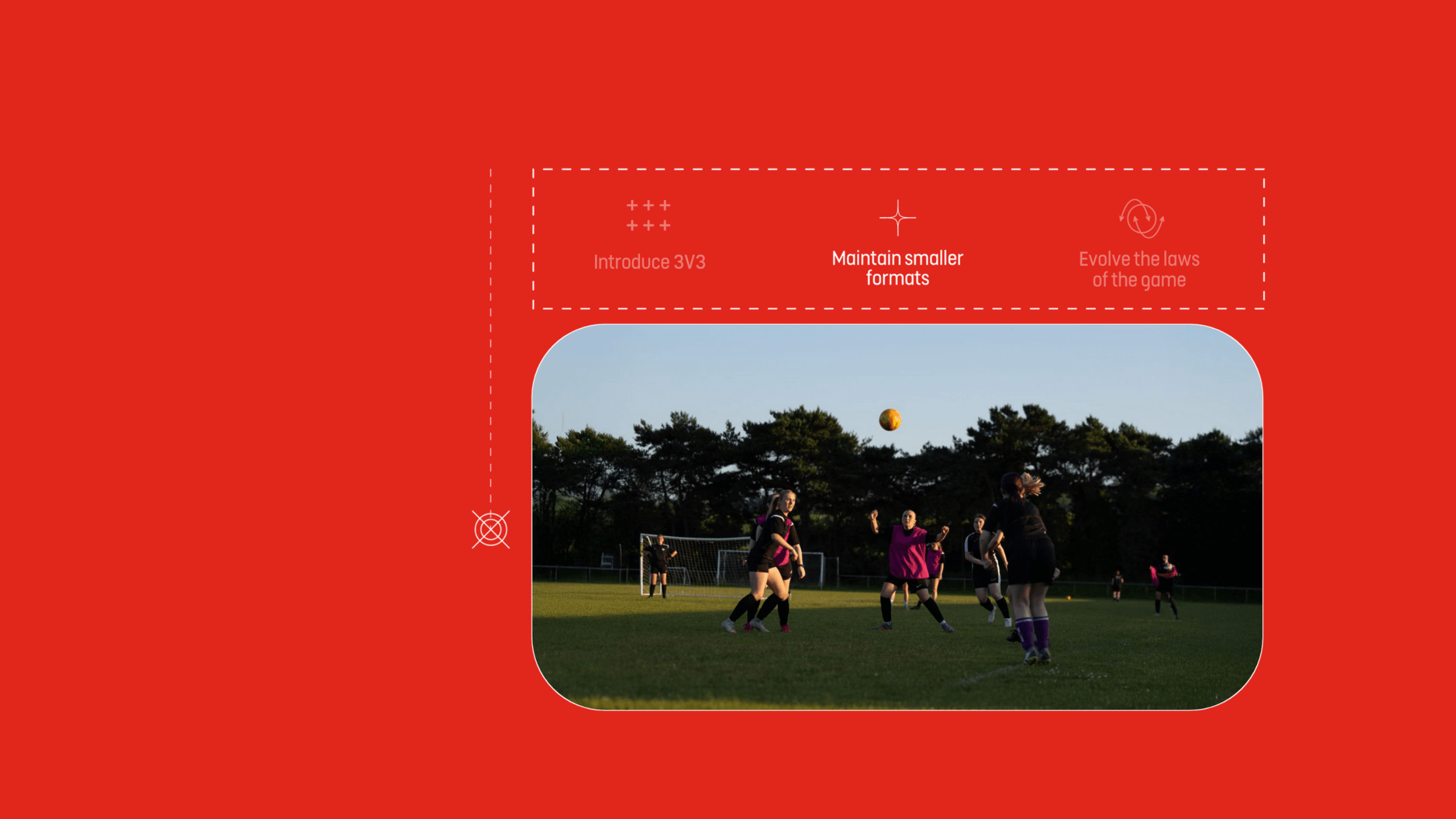
Maintain Smaller Formats
Smaller formats make players move more, in more technical ways. 11v11 will now be introduced as a maximum format of play at Year 9 so players get to play smaller formats for longer.
Introduce 3v3
Our youth player pathway will see the introduction of 3v3 as an introductory format for the youngest and newest players to the game.
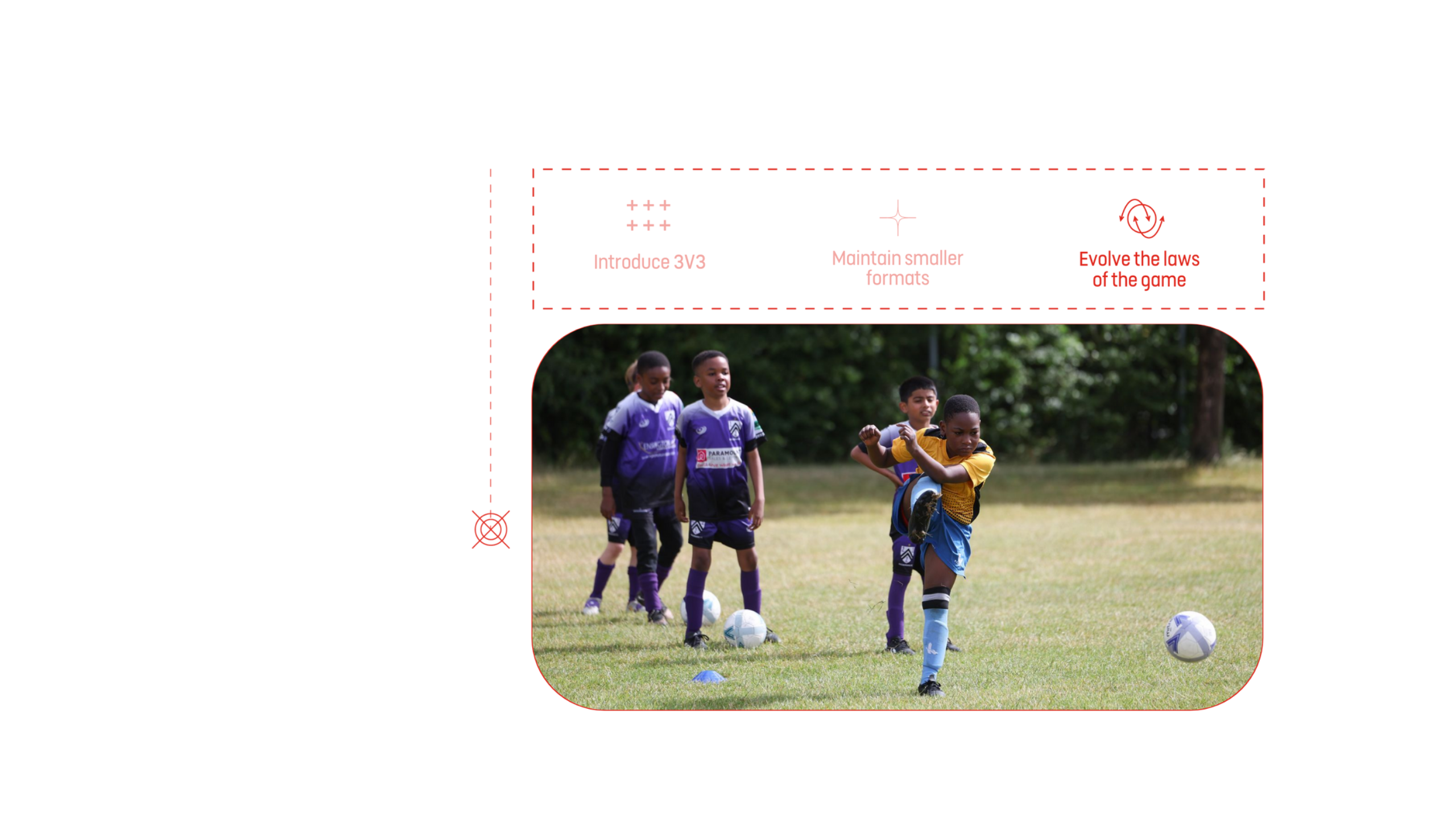
Evolve the Laws of the Game
We’ll adjust game restarts so there’s more ball in play time, and more complex rules will be added as players go into secondary education. This way, the rules are age appropriate for the right format and support every child’s development.
The following changes to playing opportunities will be made in the 2026/2027 season.
All formats are maximum formats, and formats smaller than the specified maximum can be used at each age/year group and utilising a variety of formats as part of the football offer is encouraged.

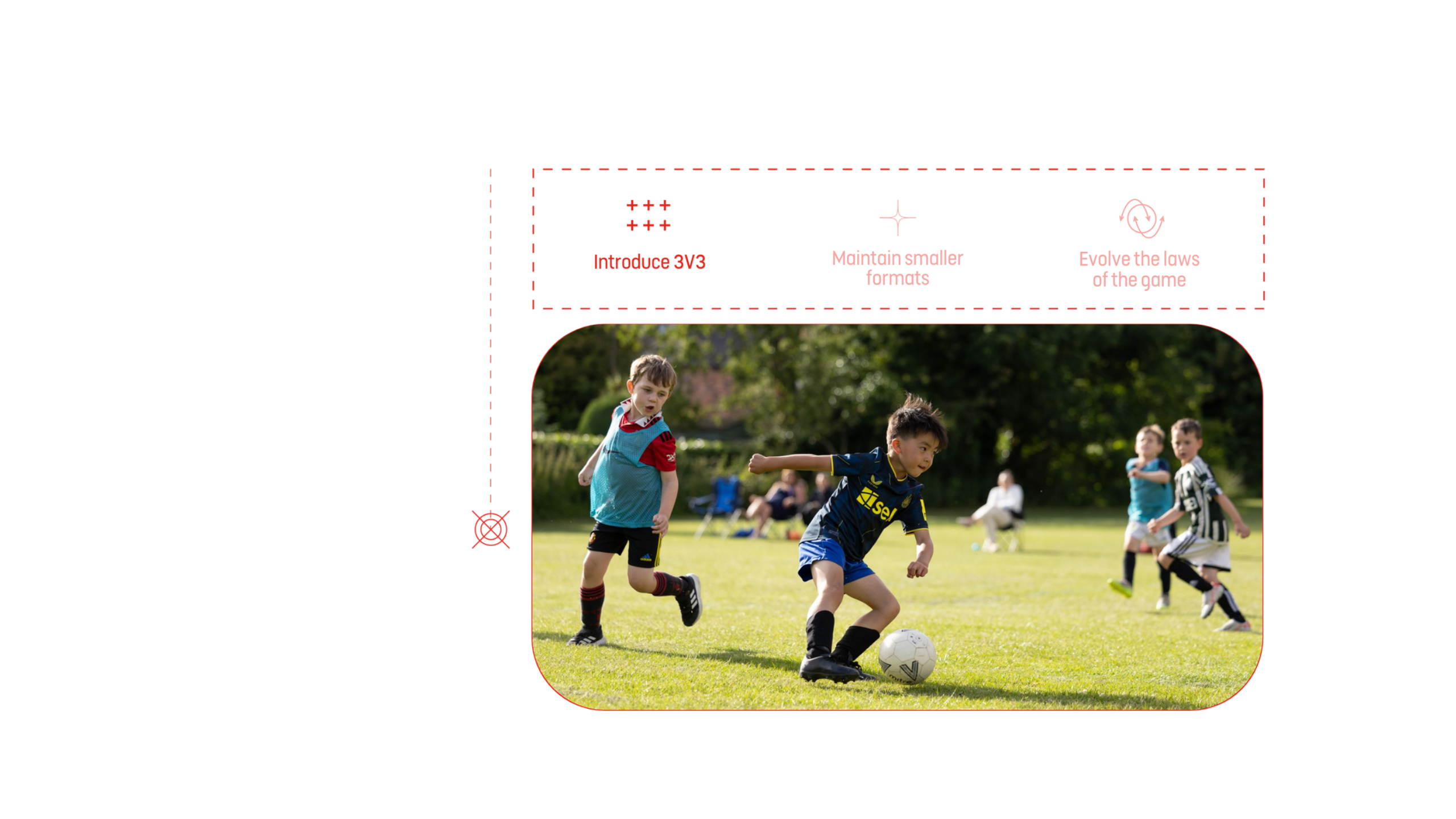



Introduce 3v3
Our youth player pathway will see the introduction of 3v3 as an introductory format for the youngest and newest players to the game.
Maintain Smaller Formats
Smaller formats make players move more, in more technical ways. 11v11 will now be introduced at Year 9 so players get to play smaller formats for longer.
Evolve the Laws of the Game
We’ll adjust game restarts so there’s more ball in play time, and more complex rules will be added as players go into secondary education. This way, the rules are age appropriate for the right format and support every child’s development.
The following changes to playing opportunities will be made in the 2026/2027 season.
All formats are maximum formats, and formats smaller than the specified maximum can be used at each age/year group and utilising a variety of formats as part of the football offer is encouraged.
These changes will come into effect across all football opportunities in schools, from intra-school activity, inter-school festivals and tournament and competition providers across schools football.
We are working with our football in education providers to implement these changes across the sector, including:
FAQs:
Can schools access funding to support the changes?
Yes. There is Football Foundation Funding for eligible organisations
What is the 'Play Phase' for Reception and Year 1?
It's England Football's specialized coaching and teaching philosophy and programme for children aged 4–6.
Are the changes being implemented across all football – schools, grassroots and academies?
Yes, they are, from the start of 2026/27 academic year and football season.
Has the ball size changed?
Yes, the use of size 3 balls across primary school groups has increased, up to and including Year 6
 Built with Shorthand